
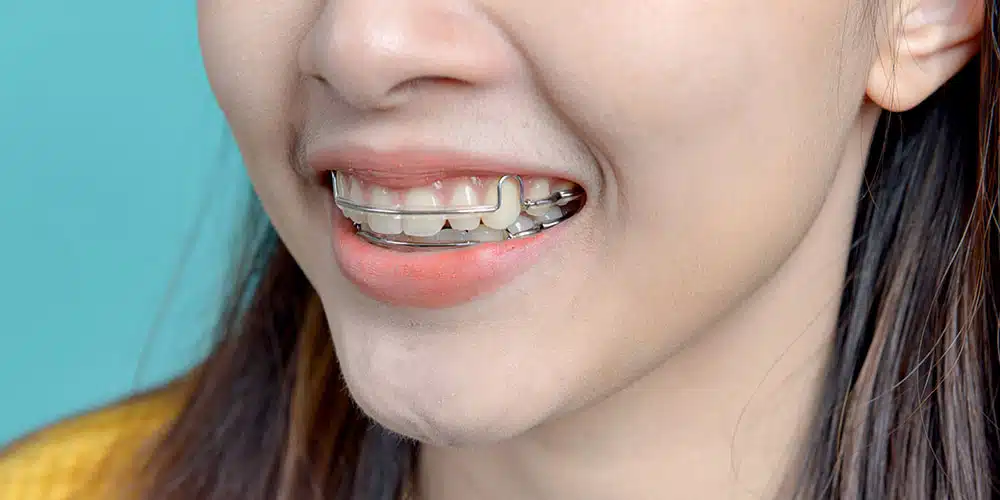
Nobody loves this answer, but here it is: yes, retainers are a long-term commitment. Not forever in the sense that nothing ever changes, but long enough that “I’ll wear it for a few months and then stop” is a plan that tends to backfire.
Teeth don’t stay where treatment puts them on their own. That’s not a flaw in orthodontic treatment. It’s just how teeth work. And understanding why makes it easier to actually stick with the retainer habit rather than treating it as an afterthought once the braces come off.
Why Teeth Move Back After Treatment
The bone around your teeth remodels during orthodontic treatment to accommodate each new position. But that remodelling takes time to fully stabilize. In the months immediately after treatment ends, the bone is still consolidating around the new tooth positions. Without a retainer holding things in place during that window, the teeth will drift.
The periodontal ligament, the connective tissue between each tooth root and the surrounding bone, has a kind of memory. It was stretched and compressed throughout treatment to allow movement. Once active treatment ends, it pulls back. That pull is what causes relapse, and it doesn’t stop just because the braces came off.
There’s also a more gradual factor: teeth continue to shift slowly throughout life, regardless of whether someone has had orthodontic treatment or not. It’s part of how the mouth ages. Lower front teeth in particular tend to crowd over time. A retainer doesn’t stop aging, but it slows that drift considerably.
What Happens If You Stop Wearing Your Retainer
This depends on when you stop and how much time has passed since treatment ended.
In the first year after treatment, the risk of meaningful relapse is highest. The bone hasn’t fully hardened around the new tooth positions yet. Stopping retainer use during this period often leads to visible shifting within weeks to months.
A few years out, the teeth are more stable. The bone has matured around the corrected positions. Stopping at this stage usually produces a slower, more gradual drift rather than a rapid relapse. But it does still happen, particularly with the lower front teeth.
The patients who tend to be most surprised by relapse are the ones who wore their retainer consistently for a couple of years, stopped because everything looked fine, and then noticed creeping crowding several years later. That gradual shift is real, and it’s one reason most orthodontists now recommend long-term nighttime retainer wear rather than a fixed endpoint.
The Two Types of Retainers and How They Work
Fixed retainers
A fixed retainer is a thin wire bonded to the back surface of the front teeth, typically the lower front six. It’s not removable. You don’t have to think about wearing it because it’s always there.
The trade-off is cleaning. Flossing requires a threader or floss picks to get under the wire. Without consistent cleaning around a fixed retainer, plaque builds up, and gum problems can develop over time.
Fixed retainers can also break or debond without the patient noticing right away, particularly if biting into something hard. Regular check-ups are the only way to catch this before shifting has already started.
Removable retainers
Removable retainers are typically worn full-time for the first few months after treatment, then transitioned to nights only. Clear plastic retainers, similar in appearance to aligners, are the most common type currently. Hawley retainers, which use a wire across the front teeth with an acrylic plate, are also still used.
The obvious limitation is that they only work when they’re in. Patients who consistently forget or skip nights accumulate enough unworn time that drift can occur even during the transition phase.
What the Long-Term Retention Plan Looks Like
At Dream Orthodontics in Surrey, Dr. Amani Morra provides specific retention instructions based on each patient’s case. The general framework for most patients looks like this:
- Full-time retainer wear for the first few months after active treatment ends
- Transition to nights only once the teeth have stabilized
- Long-term nighttime wear ongoing, with the frequency reviewed at check-ups
Some patients are given both a fixed retainer on the lower teeth and a removable retainer for the upper arch. The combination provides continuous support on the lower front teeth, which are the most prone to crowding, while the upper removable retainer handles the rest.
The Honest Take
Wearing a retainer for life sounds like a lot when you first hear it. In practice, nightly retainer wear becomes a habit most people barely think about after the first year. It takes about ten seconds to put it in before bed.
What’s genuinely inconvenient is discovering that teeth have shifted enough to require retreatment. That outcome is almost entirely preventable with consistent retainer use. The retainer is not the hard part. The hard part is remembering to care about it once treatment feels finished, and your teeth look exactly the way you wanted them to.
Book a Free Consultation at Dream Orthodontics
If you’re considering orthodontics in Surrey or have questions about retention after previous treatment, Dr. Amani Morra offers free in-office and virtual consultations at Dream Orthodontics. No referral is needed.
Learn more about Invisalign, metal braces, and clear braces at Dream Orthodontics, or explore the orthodontics for adults page if you’re returning to treatment after an earlier relapse.