


How to care for your braces and aligners in South Surrey
Good oral hygiene during orthodontic treatment should not be optional! Plaque builds up faster around brackets and wires than it does on bare teeth, and if it is not removed regularly, the result can be white spot lesions on the enamel that are visible after braces come off. A care routine is not complicated, but it can sometimes require more time and consistency than brushing without braces.
Dr. Amani Morra, Certified Orthodontic Specialist at Dream Orthodontics, shares the following guidance based on what her patients in South Surrey and White Rock actually need to know to maintain healthy teeth through your life with braces. This guide applies whether you are in metal braces, clear ceramic braces, or Invisalign.
If you have a specific question about your appliance or routine, call Dream Orthodontics at 604-542-8552. Our team is happy to provide oral hygiene guidance and can walk through your routine with you in person.
Ortho Care
Take especially good care of your teeth during orthodontic treatment.
By brushing and flossing regularly, you'll keep your teeth and gums at their best and ensure that your orthodontic treatment will deliver the healthiest smile possible.
When your braces come off, you'll see that your extra efforts have been rewarded with a healthy, great-looking smile that'll last the rest of your life.
If you fail to spend a little extra time caring for your braces, you may end up with white spots on your teeth once the braces are removed. This is an unsightly condition that no one wants.
Doing Your Part
To get the healthy and beautiful smile that you want, you, your family dentist, and Dr. Morra will have to work together as a team.
As the patient, you play the key part. It's up to you to make sure that your treatment is successful. Most importantly, you must keep your teeth clean and maintain good dental hygiene while you're wearing braces.
Proper dental care will take a little extra time and effort, but the results are well worth it. It will help you enjoy the best possible smile from your orthodontic treatment.
Plaque Is Your Enemy
Plaque is a sticky, colorless film that collects on your teeth. It's made of bacteria, food, and saliva. If you let plaque and trapped food stay on and around your braces, they can cause swollen gums, bad breath, cavities, and permanent marks on your teeth.
As your South Surrey orthodontist, we advise brushing your teeth regularly to remove this plaque. We teach all of our patients the correct way to floss while wearing braces to make sure you remove all plaque regularly.
When to Clean
Brush thoroughly each time you have a meal or snack. If you can't brush right away after a meal, be sure to at least rinse your mouth well with water until you can brush.
Carry a travel toothbrush so that you can brush when you aren’t home. At least once every day, brush your teeth and braces thoroughly until they are spotlessly clean, and then floss. This takes a little extra time, so you may want to do it at night before going to bed.
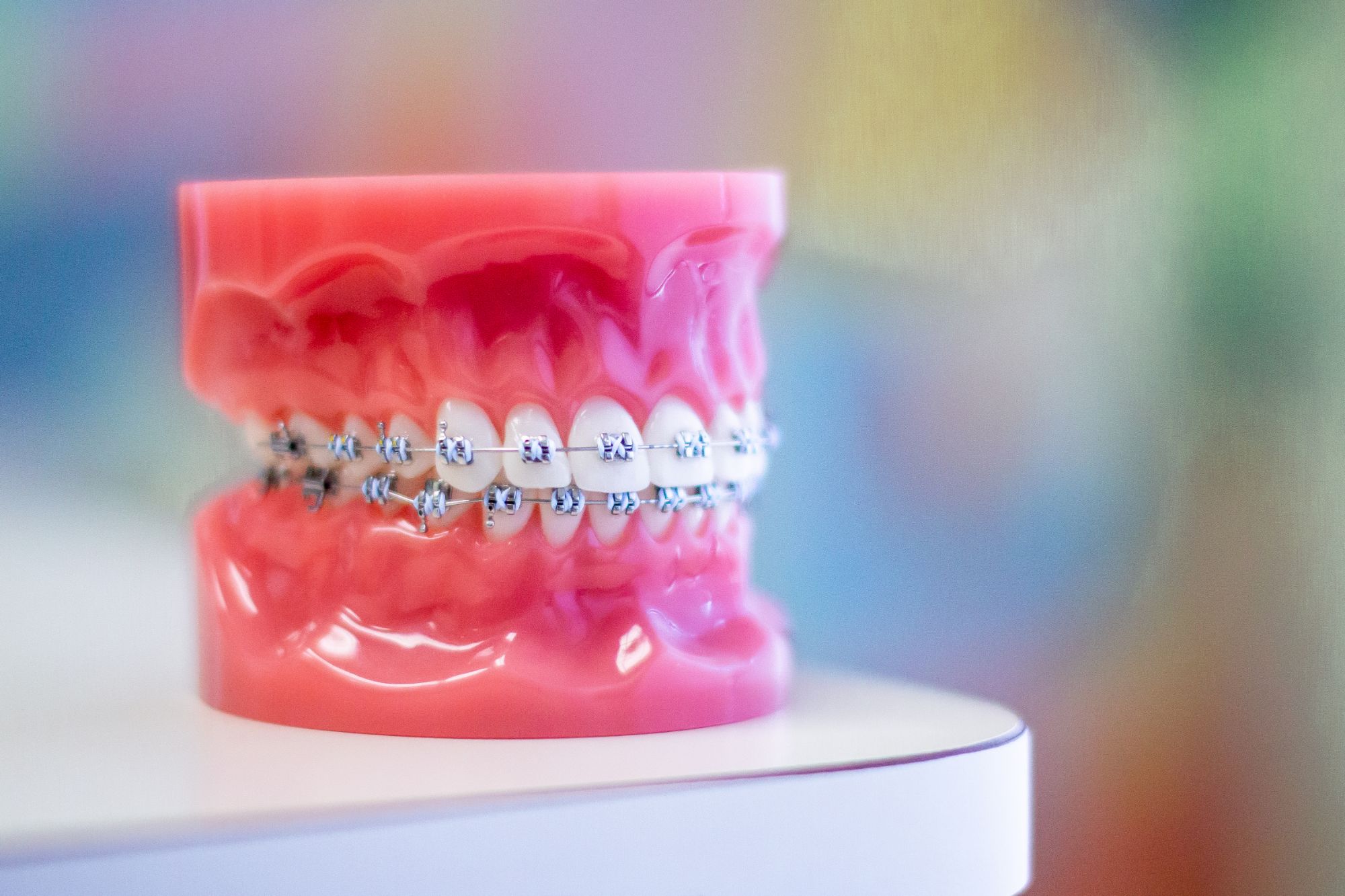
Brushing with Braces
What to use
Use a soft-bristle toothbrush and fluoride toothpaste. A soft brush is firm enough to clean effectively but gentle enough not to damage the brackets or irritate the gums. Electric toothbrushes are fine to use with braces and can improve plaque removal for patients who find manual brushing less consistent.
Try to replace your brush when the bristles become worn or approximately every three months. Braces wear bristles down faster than normal use because of the additional contact with brackets and wires.
The technique
Start at the gumline. Angle the bristles at 45 degrees toward the gum and brush in small circular motions. Then angle the brush above each bracket, below each bracket, and across the bracket face. Work across each tooth individually rather than sweeping back and forth across several teeth at once.
Pay particular attention to the areas between the wire and the gumline, and between the brackets and the gumline. These are the spots where plaque accumulates and where white spot lesions form if hygiene slips. Each brushing session should take at least two minutes.
Check your work
After brushing your metal braces, rinse and look in the mirror under good lighting. The teeth should look clean and the gums should not be visibly inflamed or puffy. If you are unsure whether you are reaching everything, disclosing tablets available at most pharmacies stain remaining plaque pink or red, making it visible so you know exactly where to focus.
How to Floss with Braces
Flossing with braces is more involved than flossing without, but it is the step that protects the spaces between teeth that brushing cannot reach. Skipping it during treatment is one of the most common ways patients develop cavities and gum problems that appear after braces come off.
Using a floss threader
A floss threader is a small plastic loop that guides floss under the archwire so you can clean between two teeth. Thread a length of floss through the loop, pass the loop under the wire, and then curve the floss against one tooth and slide it up and down to the gumline. Move it to the adjacent tooth and repeat before removing and threading to the next space.
It takes practice. The first few attempts feel slow and awkward. Most patients develop a comfortable rhythm within the first couple of weeks. Pre-threaded orthodontic floss with a stiff end built in is available at pharmacies and skips the separate threader step.
Interproximal brushes
Interproximal brushes are small cone or cylinder-shaped brushes that fit between brackets and under wires. They are useful for dislodging food debris and plaque from around the bracket bases and from spaces that floss alone cannot reach comfortably. Use them after brushing, not instead of flossing.
Water flossers
A water flosser directs a pressurised stream of water between teeth and along the gumline, which is effective at flushing out loose debris. It is a useful supplement to string flossing but not a replacement. String floss removes the sticky plaque film between tooth surfaces in a way water pressure alone cannot. Using both gives the most thorough clean.
Mouthwash during orthodontic treatment
An alcohol-free fluoride mouthwash rinse is a useful addition to the brushing and flossing routine. Swishing for 30 seconds after brushing reaches areas that bristles cannot, delivers fluoride to enamel surfaces around the brackets, and helps with fresh breath. Use alcohol-free formulas to avoid drying the gum tissue.
If your general dentist recommends a prescription fluoride rinse during your orthodontic treatment, use it as directed. Orthodontic patients are at slightly higher cavity risk than the general population because of the challenge of cleaning around appliances, and additional fluoride protection is reasonable.
Foods to avoid with braces
Two categories of food cause most bracket and wire damage which can lead to orthodontic emergencies: hard foods and sticky foods. Neither is off the menu permanently, but both require adjustment.
Hard foods
Biting directly into hard foods puts concentrated force on brackets and can pop them off the tooth. The foods to avoid biting straight into include whole apples and carrots, hard bread crusts, bagels, hard pretzels, popcorn, ice, hard candies, nuts, and corn on the cob. You can still eat most of these by cutting them into small pieces and chewing on the back teeth.
Sticky foods
Sticky foods pull at brackets and wires and can detach them from the tooth surface. The main ones to avoid entirely are chewing gum, toffee, caramel, chewy sweets, and gummy candies. These are worth skipping completely rather than trying to eat carefully, because the adhesion problem makes them genuinely difficult to manage safely with fixed braces.
Sugary drinks
Soda, sports drinks, juice, and other sugary beverages are not specifically damaging to braces, but they pool around brackets and along the gumline and increase cavity risk significantly during treatment. If you drink them, rinse with water immediately afterward. Better still, drink through a straw and follow with plain water.
Problems Caused by Poor Oral Hygiene
Good dental hygiene is critical during orthodontic treatment. Without it, plaque and food can accumulate around your braces.
The bacteria in plaque react with sugars and starches in food and form an acid that can eat away the enamel on your teeth, leading to white marks, cavities or gum disease.
- If plaque accumulates around your braces, it can leave permanent stains on your teeth called decalcification. Lines and spots from decalcification will remain on your teeth for life.
- Periodontal disease, caused by the buildup of plaque, occurs in three stages. In the first stage, plaque accumulation irritates the gums. Your gums may be puffy or swollen. They may bleed when you brush or floss. This is called gingivitis.
- Over time, the buildup of plaque may harden into a substance called tartar. As tartar accumulates, gaps or pockets may form between your gums and teeth. Even more tartar can collect in these pockets. This is called periodontitis.
- Pockets of bacteria form and deepen beneath your gums, attacking and destroying the bone that anchors your teeth. This can even cause healthy teeth to loosen or eventually fall out. This is called advanced periodontitis.

Prevent Gum Disease
Early gum disease is reversible with professional help and good home care, but if you ignore it, it can get worse.
Gum disease is usually painless, so you need to pay attention to signs like bleeding or swollen and puffy gums.
Carefully follow Dr. Morra and the staff's directions on hygiene to avoid these problems.
Caring for Invisalign aligners
Invisalign care is simpler than braces care in some ways because the aligners come out for eating and brushing. But the aligners themselves need to be cleaned daily, and teeth must be brushed before the aligners go back in after eating.
Cleaning the aligners
Rinse the aligners with lukewarm water every time you remove them. Once a day, clean them with a soft toothbrush and a small amount of clear, unscented liquid soap. Do not use toothpaste on the aligners. Most toothpastes are mildly abrasive and will scratch the aligner surface over time, making the plastic cloudier and less clear. Do not use hot water, which can warp the plastic.
Invisalign cleaning crystals and soaking tablets are available and are a useful option for keeping aligners fresh. Soak them according to the product instructions, then rinse before wearing.
Brushing before reinserting
Every time you remove aligners to eat or drink, brush your teeth before putting them back in. Wearing aligners over food residue or sugary drinks traps bacteria against the tooth surface, which is exactly the environment that causes cavities and staining. Even a quick rinse of both the mouth and the aligner is better than reinserting immediately.
What you can drink while wearing aligners
Plain water is the only drink you should have while wearing Invisalign aligners. Anything else, including coffee, tea, juice, soda, and alcohol, gets trapped under the aligner against the teeth, staining the plastic and increasing decay risk. Remove the aligners to drink anything other than water.
Storing aligners safely
When aligners are out of the mouth, store them in their case. Leaving them on a table or in a pocket makes them easy to lose or break. Keep the previous set of aligners in their numbered bag after switching to the next tray. If the current aligner is lost or damaged, going back to the previous tray prevents tooth movement from reversing while a replacement is arranged.
Dental appointments during orthodontic treatment
Orthodontic treatment does not replace visits to your general dentist. The two work alongside each other.
Continue dental visits at the frequency recommended by your general dentist
Professional cleanings remove hardened tartar buildup around brackets that brushing alone cannot reach. Your dentist can also check for early signs of cavities or gum problems during treatment and address them before they become bigger issues. If you are due for a cleaning, book it. If your dentist recommends more frequent appointments during your orthodontic treatment, follow that advice.
Tell your dentist you are in orthodontic treatment
Your general dentist and our team will often work together in coordination. If your dentist identifies a cavity, filling it during braces treatment is straightforward in most cases. If a more significant procedure is needed, Dr. Morra and your dentist can discuss the best sequence of care to avoid interrupting treatment unnecessarily.
Sports and mouthguards
A single impact to the mouth during contact sports can break multiple brackets at once, cut the inside of the lips and cheeks, and in some cases damage teeth underneath. Dream Orthodontics strongly recommends wearing a mouthguard during any sport where contact, collision, or impact is a realistic possibility.
Mouthguard options with braces
Standard over-the-counter boil-and-bite mouthguards can typically be worn over braces and provide reasonable protection. A custom-fit mouthguard from your general dentist offers better fit and coverage. Either is better than none. Wear it consistently during games and during contact practice, not just during games.
Mouthguards with Invisalign
If you have Invisalign, the aligners can be removed during contact sports and a mouthguard worn in their place. Replace the aligners immediately after the activity ends and you have rinsed your mouth. Avoid leaving the aligners out for longer than necessary.
Caring for retainers after treatment
Retainers are the final step in protecting your orthodontic result. A retainer is not optional. Teeth have a natural tendency to drift toward their original positions, and consistent retainer wear is what prevents that from happening.
Removable retainers
Removable retainers need to be cleaned daily. Rinse with lukewarm water when you remove them. Clean them with a soft toothbrush and mild soap, or use a retainer cleaning tablet. Do not use toothpaste, which is abrasive and will scratch the retainer surface. Do not use hot water, which can distort the shape.
Store the retainer in its case when it is not in your mouth. Retainers wrapped in tissue or left on plates are the most common way retainers get broken or accidentally thrown out. Keep the case with you.
Fixed or bonded retainers
Some patients have a thin wire bonded to the back of the lower front teeth as a permanent retainer. This wire needs to be cleaned around daily with a floss threader, the same way the archwire was cleaned during braces treatment. Regular dental cleanings also address tartar buildup around the bonded wire.
What to do if a retainer breaks or stops fitting
Contact Dream Orthodontics as soon as possible. A retainer that no longer fits correctly may mean teeth have shifted slightly. The sooner it is addressed, the less the correction needed. Do not continue wearing a cracked retainer with sharp edges. Set it aside and call the office.
Frequently asked questions: orthodontic care in South Surrey
How often should I brush my teeth with braces?
The American Association of Orthodontists recommends brushing after every meal and before bed. This is more than the standard twice-a-day recommendation because food gets trapped around brackets far more readily than around bare teeth. If you are away from home, rinsing thoroughly with water after eating is a reasonable substitute until you can brush.
Is it normal for my gums to bleed when I floss with braces?
Some gum bleeding when you start flossing regularly with braces is common, particularly if flossing has been inconsistent. It usually reflects mild gum inflammation from plaque accumulation. Persistent bleeding should be assessed. Mention this at your next Dream Orthodontics appointment or book a cleaning with your general dentist.
Can I use an electric toothbrush with braces?
Yes. An electric toothbrush is fine to use with braces. Use the brush on a gentle or sensitive mode and avoid pressing hard against brackets. The oscillating motion of an electric brush can improve plaque removal efficiency compared to manual brushing, particularly around the bracket edges and along the gumline.
What do I do if I can not get floss under the wire?
Use a floss threader, which is a small flexible loop that guides the floss under the wire. Pre-threaded orthodontic floss with a built-in stiff end eliminates the separate threader step. If neither is available, an interproximal brush can clean the spaces between teeth while you get the right supplies. The team at Dream Orthodontics can demonstrate the technique at any appointment.
Can I whiten my teeth while wearing braces?
Whitening products applied during braces treatment will bleach the exposed tooth surface but not the area under the brackets. When braces come off, the result is uneven colouring with lighter areas where the teeth were exposed and darker spots where the brackets were. Wait until braces are removed and you have had a professional cleaning before beginning any whitening treatment.
How do I take care of my teeth right after braces come off?
Book a professional cleaning with your general dentist as soon as possible after braces are removed. Areas that were hard to clean during treatment may have some tartar buildup. Start your retainer wear immediately as directed by Dr. Morra. Give your teeth two to four weeks before beginning any whitening treatment, as enamel can be sensitive to whitening agents immediately after appliances are removed.
Where is Dream Orthodontics located?
Dream Orthodontics is at #101, 3038 Croydon Drive, Surrey, BC V3Z 0T1. The clinic serves families from Grandview Heights, Morgan Crossing, Rosemary Heights, Sunnyside, Ocean Park, Elgin Chantrell, Crescent Beach, Pacific Douglas, and White Rock.

Book a free consultation
Dream Orthodontics is open Monday through Thursday and on Surrey School District Pro-D days. We offer a variety of insurance and financing options for our patients.
Phone: 604-542-8552
Monday: 9:00 AM – 6:00 PM
Tuesday: 9:30 AM – 6:00 PM
Wednesday: 7:00 AM – 3:00 PM
Thursday: 7:00 AM – 4:00 PM
Friday: 8:00 AM – 4:00 PM